
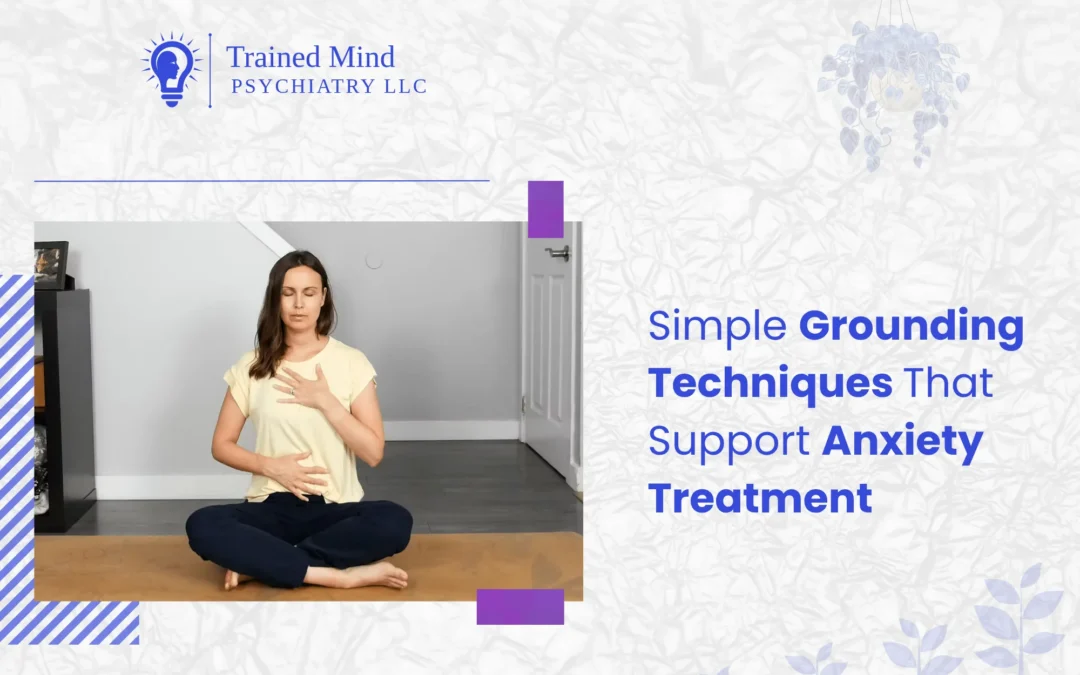
Anxiety may make your mind spin with anxieties and “what-ifs”. You may feel your heart beating faster, your muscles tense up, or have trouble concentrating. Grounding practices might enable you to return your focus to the here and now and deal with emotions of anxiety. Grounding won’t eliminate anxiety, but it can help you feel more connected to your surroundings.
What Are Grounding Techniques?
Grounding techniques are simple activities that help you focus your attention on your senses, your body, your breathing, or your environment. They can enable you to stand back from nervous thoughts and focus on what is happening now.
Grounding can help you respond to stressful circumstances, notice physical feelings, and make room to respond more calmly. Everyone responds to different techniques, so it’s crucial to choose a technique that feels comfortable.
6 Simple Grounding Techniques for Anxiety
1. Try the 5-4-3-2-1 Method
This sensory grounding technique utilizes your environment to help bring your mind back to here and now.
5 things to see: Look at what is around you.
4 things you can feel: Feel your feet on the ground, or your hands on a desk.
3 things you might hear: Listen for sounds around you.
2 things you can smell: Notice the smells you know that are around you.
1 thing you can taste: Notice the taste in your mouth.
Take your time with each step. Focus on the details rather than rushing through the list.
2. Focus on Physical Sensations
If you are anxious and tight, or restless, physical grounding might help you redirect your attention.
Try pressing your feet down into the floor, putting your hands on a desk, or rolling your shoulders slowly. Feel the pressure, the movement, the contact with the surfaces all around you.
These little things give you something tangible to focus on and require no special equipment.
3. Practice Slow, Comfortable Breathing
Anxiety might alter your breathing pattern. Some people feel that breathing slowly and comfortably helps them cope with physical tension.
If you are comfortable, breathe out slowly through your nose and then breathe in gently. Repeat for several natural breath cycles.
If you feel dizzy or uncomfortable concentrating on your breathing, you can go back to breathing normally and attempt a sensory grounding exercise instead.
4. Describe Your Surroundings
Find something near you and tell me about its color, shape, size, and texture. For example, you may see a mug that is white, ceramic, and next to your computer.
You can also describe the room you are in, or name objects of a certain color. This easy exercise turns your attention away from ongoing anxieties to observable facts.
5. Use Touch and Temperature
Hold a familiar object, such as a cushion or a glass of water, and feel its texture, weight, or temperature.
Pay attention to what you can feel in your body, without criticizing the feeling. Or, if you choose, feel the texture of your clothes or the solid surface under your palms.
This strategy can be effective at home, work, or while waiting for an appointment.
6. Count Backward or Name Present Facts
A simple exercise of the mind might offer your attention a vacation from repetitive concern.
Try counting backward from 50 slowly. Or name objects around you, or list 3 facts that are true right now:
I am sitting in a chair.
My feet are on the ground.
I have a window next to me.
The aim is not to argue with worried thoughts. It serves to offer the mind something impartial upon which to focus.
How Grounding Fits into Anxiety Treatment
Grounding strategies may help you during nervous periods, but if anxiety is a regular problem, you may need more help.
Therapy can help you recognize patterns of anxiety and develop coping skills. Depending on your symptoms and needs, medication may be included in your treatment plan. Getting enough sleep, being physically active, and having good social connections are all important for general well-being.
If appropriate, medication management can be part of a customized approach to mental health care at Trained Mind Psychiatry. Grounding activities can complement professional treatment by equipping you with practical skills to employ in between consultations.
Tips for Using Grounding Techniques
Here are some simple habits to make grounding easier to practice:
- Begin when you are reasonably calm. Knowing a technique allows you to use it in moments of stress.
- Pick what’s comfortable. You don’t need to do all the exercises.
- Practice early. When you start to notice anxious thoughts or physical tension creeping in, try grounding.
- Have patience. And if your mind wanders, bring your focus back to the exercise.
- Edit as you wish. If one technique doesn’t feel comfortable or useful, try another.
The aim is not to get rid of all anxious feelings. It is to discover practical ways of responding when anxiety rises.
When Should You Seek Professional Help for Anxiety?
If anxiety is frequent, intense, or interfering with sleep, work, relationships, or daily activities, grounding may not be enough.
Get professional help if you have frequent panic attacks, are worried all the time, or find it hard to do everyday things. A licensed health care professional can evaluate your symptoms and discuss what treatment options might be appropriate.
If a grounding exercise doesn’t work, it doesn’t mean you did it wrong. You might prefer a different approach or need more help.
Anxiety Treatment at Trained Mind Psychiatry
Dealing with anxiety may require more than one method. By knowing your symptoms and therapy options, you can work out a treatment strategy that is ideal for you.
Trained Mind Psychiatry provides psychiatric examination and personalized medication management. Grounding exercises are practical coping skills that can be used as part of a comprehensive strategy to manage anxiety with professional care.
If anxiety is disrupting your daily life, learn about your treatment options with Trained Mind Psychiatry.
FAQs
Do grounding techniques stop anxiety completely?
No. Grounding may help you manage anxious feelings and redirect your attention, but it does not eliminate anxiety for everyone.
How often should I practice grounding?
You can practice regularly, even when you are in a relaxed state. It helps you learn the procedures before times of stress come.
Which grounding technique works best for anxiety?
There is no single best technique. Try sensory grounding, physical movement, slow breathing, or mental exercises to find what feels most helpful.
Can grounding replace therapy or medication?
No. Grounding is a coping tool that can complement professional care. Persistent or severe anxiety may require a more comprehensive treatment plan.
This post is for educational purposes only and does not replace professional medical advice, diagnosis, or treatment. Consult a qualified healthcare professional about your mental health concerns.
