
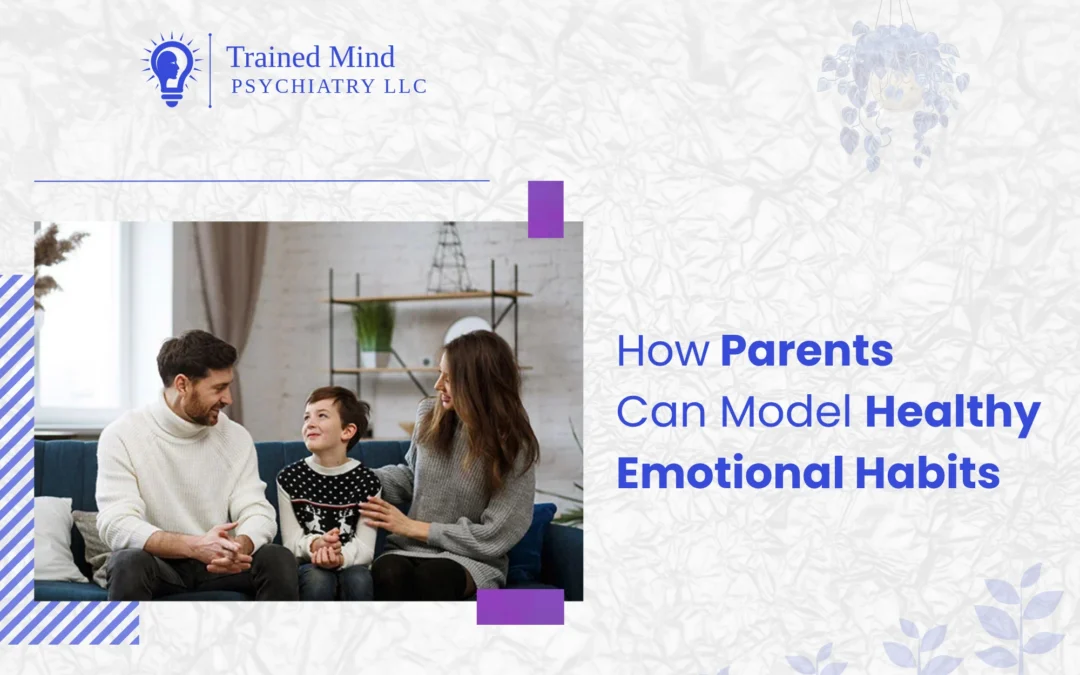
Kids learn to regulate their emotions through observing the people in their lives. How parents manage stress, express displeasure, and resolve conflict may influence how children learn to regulate their own moods.
It’s not about always being silent and modelling healthy emotional habits. It is about teaching kids that feelings are fine, mistakes can be corrected, and difficult situations can be dealt with constructively. It’s a mindset that can be developed. Parents who practice consistently may be more prepared to teach their children emotional awareness, communication skills, and healthy coping methods.
Why Modeling Healthy Emotional Habits Matters
Children are still learning how to understand their feelings and deal with unpleasant situations. Parents can support this process by modelling effective ways of dealing with emotions.
A parent who can deal with disappointment and solve problems teaches a child that failure doesn’t have to be met with rage or blame. Likewise, children learn to talk respectfully when parents listen respectfully in arguments.
Kids also need a supportive home environment to feel safe in dealing with difficult emotions. They realize that when they feel sad, anxious, and frustrated, they are not wicked or weak.
Every child is different, and parents cannot control every emotional response. But young people can learn important abilities through frequent demonstrations of positive behavior to use at home, at school, and in relationships.
Practical Ways Parents Can Model Healthy Emotional Habits
Recognize and Name Your Emotions
Children may find it difficult to describe what they feel. Parents can help by naming their own feelings in ordinary language.
For example, you might remark, “I’m upset because our plans changed. “Give me a minute to think about what we can do instead.”
This shows kids that you can see their feelings without having to do something about them right away.
Also encourage your child to put their sentiments into words. Instead of stating, “You’re overreacting,” try asking, “Are you feeling disappointed or worried about what happened?”
Give them time to find their own words, rather than assuming you know just how they feel.
Demonstrate Healthy Ways to Manage Stress
Parents often feel overwhelmed by the demands of everyday responsibilities. Children can learn by watching how adults manage stress productively.
You may take a little walk, listen to music, stretch, or stop and think before responding to an unpleasant scenario. If applicable, explain your selection.
For instance, say, “I’m feeling stressed, so I’m going to take a short break and come back to this when I feel ready.”
It shows youngsters that when you’re stressed, you need to know what you need, and that you have a choice about how you respond. It also teaches children that walking away might be a constructive strategy to get themselves together rather than avoid a situation.
Respond to Anger Without Aggression
It is normal to feel furious, but youngsters have to learn that it is not all right to act unkindly just because they feel upset.
It’s easy to get annoyed when you’ve just cleaned the room, and then your youngster creates a mess. If you don’t want to yell, say, “I’m frustrated that the floor is dirty again. Let’s clean it up as a group.
When kids are upset, acknowledge the feeling but keep clear boundaries. You can say, “It’s okay to get mad, but hitting is not okay. Let’s find another method to say what you’re experiencing.”
These answers teach children that feelings may be communicated without hostility and problems can be solved gently.
Listen Before Offering Advice
Parents like to promptly fix their children’s problems. But children may need to be heard before they are ready to think about solutions.
When your child claims they weren’t wanted at school by the other kids, don’t answer, “Don’t worry about it,” or “Just get some new friends.” Try expressing something like, “That sounds upsetting. “Want to tell me some more about what happened?”
It makes children feel heard and opens up lines of communication. Once you hear how they feel, you may talk about what could be done to make things better.
Apologize When You Make Mistakes
Even good parents might blow up or act out of character when put under stress. The point is to take ownership and rebuild the relationship.
If you raise your voice, you can say: “Sorry I shouted previously. I was upset, but I should have talked more gently.”
Don’t blame your child for your reaction. An authentic apology shows that everyone makes errors and that owning up to them is a sign of good relationships.
It also teaches kids how to take ownership of their own behavior and how to make amends when they have hurt someone.
How to Help Children Manage Big Emotions
Parents can help children develop emotional management skills by responding with patience and appropriate limits.
When your youngster gets overwhelmed, attempt to:
- Acknowledge the feeling: Let your youngster know you understand their displeasure, sadness, or anxiety.
- Remain calm if you can: Speak in a calm voice and do not aggravate the issue.
- Be firm about boundaries: Make it obvious that hitting, threatening, or injuring others is not acceptable.
- Offer a coping strategy: Suggest painting, taking a nice breath, or sitting quietly together, depending on what your child needs.
- Talk afterwards: When your child is calmer, talk about what happened and think about alternate ways to respond next time.
Children may not hear explanations while they are feeling strong emotions. Let them settle before you go talking about repercussions or solutions.
Your approach should also be guided by your child’s age and developmental needs. Younger children may need basic explanations and direct guidance, while older children may need more independence in choosing ways to cope.
Create a Home Where Feelings Can Be Discussed
It is simpler to practice healthy emotional behaviors when your house is a place where feelings may be talked about openly.
Talk to your kids about their experiences and listen to them without judgement. Make space to talk about the good and the hard feelings. You could enquire, “What was the best part of your day?” or “Was anything hard today?
Parents can also share their experiences without burdening children with adult difficulties. Saying that you feel nervous before a meeting can help. You can’t expect a youngster to help you manage your stress and give you emotional support.
Children need to understand that adults remain responsible for their own emotional well-being.
When Should Parents Seek Professional Support?
Children acquire emotional abilities at varying rates, and occasional impatience or emotional outbursts are not necessarily symptoms of a mental health disorder.
But if emotional or behavioral problems persist, get worse, or interfere with school, sleep, friendships, or family life, talk to your child’s pediatrician or a certified mental health expert. Teen therapy can help them develop healthier coping skills and learn to manage their emotions.
Parents may also find it helpful to have assistance, because prolonged stress or anxiety can impact their ability to respond consistently at home. Taking care of your own emotional health might help create a more supportive atmosphere for your child.
Trained Mind Psychiatry offers psychiatric care and medication management for acceptable mental health needs.
FAQs
How can parents model healthy emotional habits?
Parents should model healthy emotional behaviors by recognizing their feelings, managing stress constructively, speaking politely, and apologizing when they make mistakes.
How do parents teach children emotional regulation?
Help kids learn to understand their emotions, exercise coping methods, and express them safely. These skills can be developed with continued guidance and daily examples.
Should parents hide their emotions from their children?
No. Children can learn by watching parents feel and cope with different emotions. The trick is to communicate your sentiments effectively, without making the children responsible for your adult emotional demands.
When should I seek professional help for my child’s emotions?
Consider professional guidance when emotional difficulties persist or interfere with daily activities, relationships, school, or family life.
This post is for educational purposes only and does not replace professional medical advice, diagnosis, or treatment. Consult a qualified healthcare professional about concerns regarding your child’s mental health.
